
Absent in Spring

I don’t read a lot of older books, tending more toward recent releases. For example, I tried to read The Woman in White by Wilkie Collins (serialised between 1859 and 1860), because the Secret Life of Books podcast (recommended) did a couple of episodes on it. But it just wasn’t for me. Similarly, Wuthering Heights (1847), which landed for me as terrible people treating each other terribly. (Apologies to those who like Emily Brontë’s novel.)
I did listen to Asimov’s Foundation (1951), Foundation and Empire (1952), and Second Foundation (1953) this past October, but couldn’t make it through his I, Robot collection (1950).
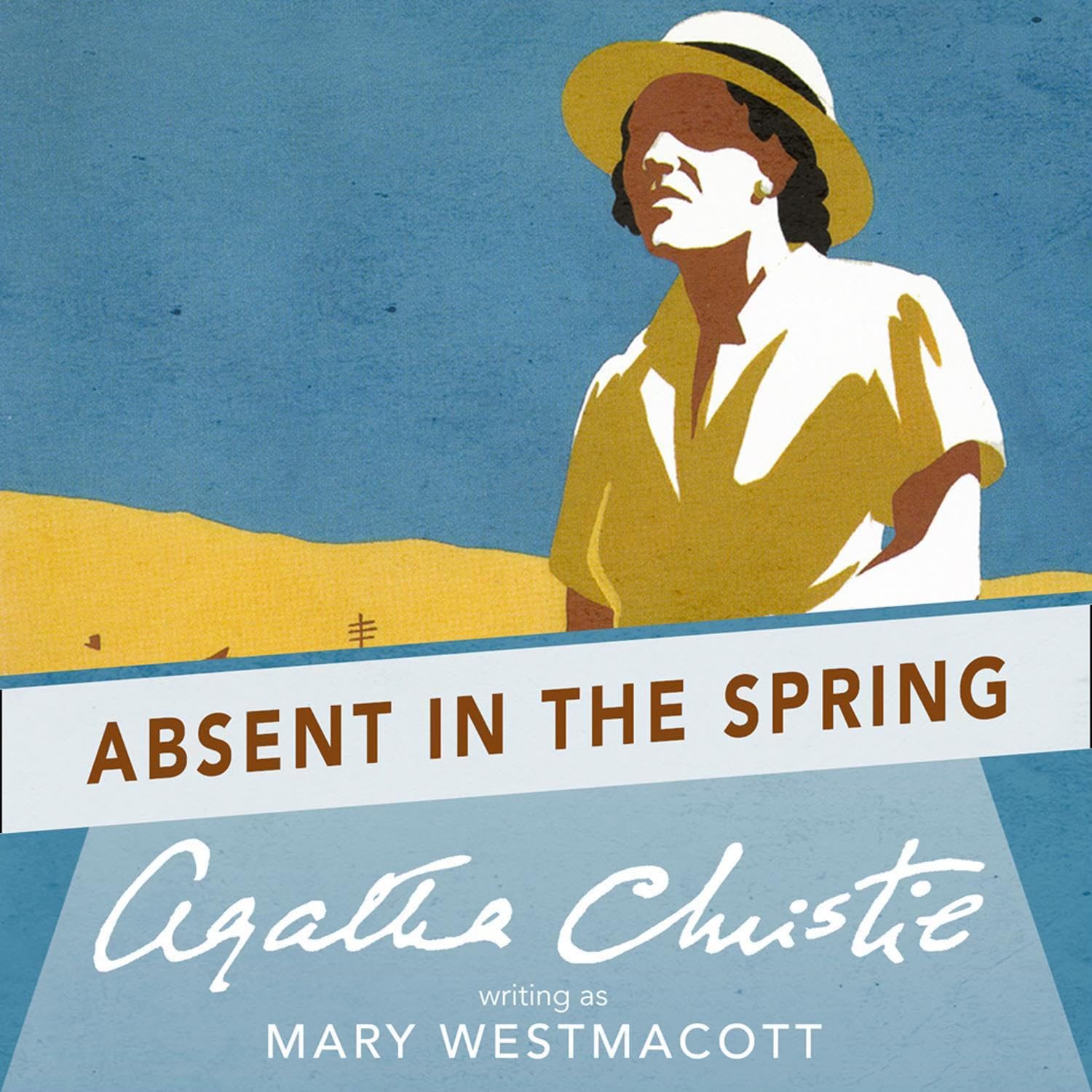
Leigh Sales recommended Absent in Spring by Agatha Christie on an episode of the podcast she does with Annabelle Crabb called Chat 10, Looks 3 (also recommended). Christie wrote it under the pseudonym Mary Westmacott, which was news to me (I didn’t know she’d ever used a psuedonym).
Well, turns out, Agatha Christie can write. Who knew? (Kidding, of course.)
First published in 1944, it’s the story of an Englishwoman, Joan Scudamore, who is returning by train to the UK from a visit to her daughter in Iraq, when flooded railway tracks leave her unexpectedly alone and stranded in an isolated rest house in the middle of nowhere.
And once she’s stuck there and runs out of stuff to read, she gets into her own head, and proceeds to get bogged down there as well. The bulk of the book plays out in her thoughts and memories, and we, as readers, get to see her reluctantly join the dots of her life in a new way that forces her to confront who she really is.
Joan is both an unreliable narrator and an unsympathetic character, and yet, I found myself sticking with the book, rooting for her to make up her mind to do better.
I’ll leave it to you to read whether or not she does.
I found it a fascinating feat of writing for Christie to situate us so much in one person’s head for so long, and have it be that compelling. And hats off to narrator Jacqui Crago for doing such a good job on the audio.
I encourage you to give Absent in the Spring a try, and may it work better for you than The Woman in White did for me.
What’s an older book you’d recommend? I’m always looking for things I’ve missed.